tools/rebuild_pages.sh rebuilds the site within 5 minutes of a change; by hand: python3 -B tools/site.py.1RB0RA_1LC0LF_1LE0LD_1LB---_1RA1LB_0LB0RC
Upstream result
Claimed elsewhere
The blank-start machine never halts: BECv10.v.TM29 ↗. Recorded commit time: 2026-10-13T13:42:06Z. First public push time is not established.
Absent from the current 663 holdout list. Earlier local observations remain below.
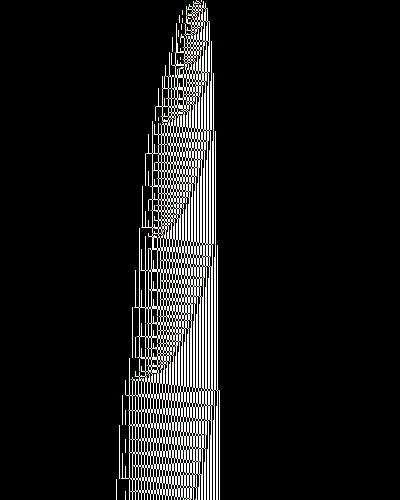
About this picture
The standard picture (bbchallenge.org's Default view): each row is the whole tape at one step, time runs downward, and the head's path draws the pattern.
Overview
In one sentence
BECv1 tm108 twin (E1): 3-cell binary counter, unary, marker; rounds ruled (99.7%), the grid-shifting eat is open
- Upstream
- The blank-start machine never halts: BECv10.v.TM29 ↗. Recorded commit time: 2026-10-13T13:42:06Z. First public push time is not established.
- Status
- Externally Solvedtight · updated 2026-10-11Not blocking · Stuck at the tight stage. Answer Q1–Q3 whenever; a “no” redirects the work.idle since Oct 11 08:55 · status.json 2026-10-11
- Class
- Bell eats counterours: Bell eats counter (sheet) · ours adds: BECv1 tm108 twin (E1) with 3-cell counter digits and a grid-shifting eat · med confidence
- On the list
- not on
BB6_holdouts_663.txt(line 191 of the previous list) · historical 740 line 191
Your calls on file 6
- priority call (answered)
- With #29's generic size lemma proved and only the leading-spacer recovery left (true on all 265,642 test words, unproved), fund one last ~2 h stage on it with a hard stop, or park #29 as STUCK now?
- funded
- option: tight · date: 2026-10-11
- 2026-10-10 · deepen
- #29's rounds, overflow and marker are ruled (99.7% of K-transitions to 1e10), but the grid-shifting eat is not. Spend one ~2 h deepen stage ruling the eat, or park #29 as STUCK? (Dennis: go with all recommendations (2026-10-10))
- 2026-10-10 · recovery
- With every #29 round ruled and the size bound proven by test except in rare leading-spacer epochs (where a surviving t has always recovered), fund one ~2 h recovery stage, or park #29 as STUCK? (auto-applied: Claude's recommendation, under Dennis's standing instruction 'do your recommendations and continuously orchestrate' (2026-10-10, while he was away). Override any time.)
- 2026-10-10 · size_invariant
- With #29's eat ruled and safe for every t-free counter, fund one ~2 h stage on the last size invariant (eat-made t units clear before the next eat), or park #29 as STUCK at it? (auto-applied: Claude's recommendation, under Dennis's standing instruction 'do your recommendations and continuously orchestrate' (2026-10-10, while he was at lunch). Override any time.)
- 2026-10-11 · tight
- With #29's generic size lemma proved and only the leading-spacer recovery left (true on all 265,642 test words, unproved), fund one last ~2 h stage on it with a hard stop, or park #29 as STUCK now? (Dennis: go with recommendations (2026-10-11))
Mechanism
How it works: 3 notes
- Tape: counter W of 3-cell units (0 = 000, 1 = 100, spacer 010; MSB left), unary (010)^b, marker 00, then (101)^c. Only E1 differs from tm108: B carries, so digits are 3-cell units.
- Each round the marker steps one unit left (b-1, c+1) and W += 1 (B carries over 100 and spacers, turns at 000); an overflow adds a 3-cell digit at the left end.
- At b = 0 the marker eats W: the 3-cell grid shifts by one cell (1-digits -> spacers, spacers -> 001), c becomes the new unary, the marker is reborn at the right, then mini-eats re-align W. N ~ (4t)^(1/3); no halt to 1e10.
Figures for Checkpoint A
The site's own view. Each zigzag is one round between the counter (left turns) and the marker (right turns).
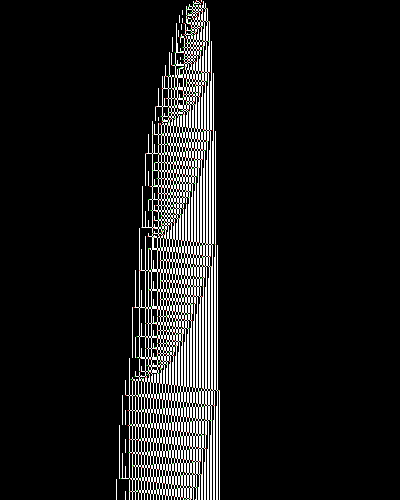
One row per step. Follow the right turning point leftwards until it meets the left turns, then the run right.

Overall shape only. Compare the moving left edge with the nearly fixed right edge; faint horizontal bands are epochs.

More figures (1)Fig 4: Left records, left edge pinned
One row per new leftmost cell; an overflow makes three. The pinned edge shows the counter word between epochs.

Rules (11/12 validated)exact tape rewrites the proof will formalize, each re-checked by simulation
| rule | from ⟶ to | cases | steps | checked |
|---|---|---|---|---|
| R1 A over spacer (= BECv1 HR1) | l A> (101)n r ⟶ l (010)n A> r | — | 7n | ✓60/60 |
| R2 A over carried digit | l A> 111 r ⟶ l 000 A> r | — | 3 | ✓60/60 |
| R3 B over spacer (= HR3) | l (010)n <B r ⟶ l <B (101)n r | — | 3n | ✓60/60 |
| R4 carry over digit 1 | l 100 <B r ⟶ l <B 111 r | E1 = 1LB hands the carry back to B (tm108: E keeps carrying) | 3 | ✓60/60 |
| R5 turn at digit 0 | l 000 <B r ⟶ l 100 A> r | — | 5 | ✓60/60 |
| R6 overflow at the left end | 0∞ <B r ⟶ 0∞ 100 A> r | new MSB digit, 3 cells | 5 | ✓60/60 |
| R7 marker step (= HR2) | l A> 101 00 101 r ⟶ l <B 00 101 101 r | — | 13 | ✓60/60 |
| R8 marker birth (= HE2) | l 010 A> 0∞ ⟶ l <B 00 101 0∞ | — | 6 | ✓60/60 |
| ROUND: one counter increment | 0∞ W (010)b+1 A> 101 00 (101)c 0∞ ⟶ 0∞ inc(W) (010)b A> 101 00 (101)c+1 0∞ | W over {010,000,100}, ends in a digit; W = U 000 V with V in {010,100}* (s, o = counts in V): inc(W) = U 100 V' (V' = V with 100 -> 000); no 000 in W: inc(W) = 100 V'. Holds for 870,221 of 872,741 K-to-K transitions from blank to 1e10 (0 mismatches) | 10b+21+10s+6o | ✓372/372 |
| OVERFLOW: one counter period, left record to left record | 0∞ <B W (101)b 00 (101)c 0∞ ⟶ 0∞ <B 111 W (101)b-2^D 00 (101)c+2^D 0∞ | W over {111,101} (all digits carried), D = number of 111 units, b > 2^D. From blank: 2,382 of 2,382 in-epoch left-record pairs to 1e10; c = 2^D-1 at 2,911 of 2,919 clean left records | — | ✓150/150 |
| EAT shape (b = 0), aligned W: no halt, next K reached | 0∞ W A> 101 00 (101)c 0∞ (b = 0) ⟶ 0∞ W' (010)b' A> 101 00 (101)c' (r') 0∞, marker reborn at the right end | Shape check only (no halt, a K-moment follows). W' is W re-read on a grid shifted by one cell (100 -> 010, 000 -> 000, 010 -> 001) plus local changes; exact form not ruled | — | ✓400/400 |
| EAT cascade: exact rule (open) | eat with 001 units (shifted segments) and pseudo-markers ⟶ open | 2,186 eat/mini-eat transitions and 334 carries into shifted segments to 1e10 are not covered by any exact rule yet | — | –untested |
Compressed historythe tape as 0∞ <B W (101)b 00 (101)c 0∞ (at each left record; W over d = 111, S = 101) at 36 moments: where the rules are read off
| step | W (d = digit, S = spacer; MSB left) | D (digits in W) | b | c |
|---|---|---|---|---|
| 7,904 | d | 1 | 29 | 1 |
| 8,499 | dd | 2 | 27 | 3 |
| 9,572 | ddd | 3 | 23 | 7 |
| 11,241 | dddd | 4 | 15 | 15 |
| 13,034 | d | 1 | 35 | 1 |
| 13,749 | dd | 2 | 33 | 3 |
| 15,062 | ddd | 3 | 29 | 7 |
| 17,211 | dddd | 4 | 21 | 15 |
| 19,592 | ddddd | 5 | 5 | 31 |
| 22,402 | SddSd | 3 | 31 | 7 |
| 24,761 | dSddSd | 4 | 23 | 15 |
| 27,562 | ddSddSd | 5 | 7 | 31 |
| 30,808 | SSdSdd | 3 | 34 | 7 |
| 33,397 | dSSdSdd | 4 | 26 | 15 |
| 100,093,972 | ddddSSddSdSSdSSSSSSSSSSSSSSSSSSSSSSSd | 9 | 179 | 511 |
| 100,500,756 | SSddSSSSdSdSSd | 5 | 684 | 31 |
| 100,715,701 | dSSddSSSSdSdSSd | 6 | 652 | 63 |
| 101,114,874 | ddSSddSSSSdSdSSd | 7 | 588 | 127 |
| 101,790,343 | dddSSddSSSSdSdSSd | 8 | 460 | 255 |
| 102,649,764 | ddddSSddSSSSdSdSSd | 9 | 204 | 511 |
| 103,084,352 | SSddSSSSdSSSSSSdSSd | 5 | 685 | 31 |
| 103,300,017 | dSSddSSSSdSSSSSSdSSd | 6 | 653 | 63 |
| 103,700,630 | ddSSddSSSSdSSSSSSdSSd | 7 | 589 | 127 |
| 104,378,979 | dddSSddSSSSdSSSSSSdSSd | 8 | 461 | 255 |
| 9,822,265,052 | dSSSdSdSSSdd | 5 | 3,484 | 31 |
| 9,823,375,757 | ddSSSdSdSSSdd | 6 | 3,452 | 63 |
| 9,825,566,450 | dddSSSdSdSSSdd | 7 | 3,388 | 127 |
| 9,829,824,959 | ddddSSSdSdSSSdd | 8 | 3,260 | 255 |
| 9,837,850,460 | dddddSSSdSdSSSdd | 9 | 3,004 | 511 |
| 9,851,935,385 | ddddddSSSdSdSSSdd | 10 | 2,492 | 1,023 |
| 9,872,240,918 | dddddddSSSdSdSSSdd | 11 | 1,468 | 2,047 |
| 9,899,736,054 | SSSdddddSSSdSdSSSdd | 9 | 3,005 | 511 |
| 9,913,826,129 | dSSSdddddSSSdSdSSSdd | 10 | 2,493 | 1,023 |
| 9,934,141,962 | ddSSSdddddSSSdSdSSSdd | 11 | 1,469 | 2,047 |
| 9,975,773,479 | SdSdSSSdddddSSSdSdSSSd | 10 | 2,495 | 1,023 |
| 9,996,120,762 | dSdSdSSSdddddSSSdSdSSSd | 11 | 1,471 | 2,047 |
W (d = digit, S = spacer; MSB left)last dSdSdSSSdddddSSSdSdSSSdD (digits in W)last 11blast 1,471clast 2,047Template comparisonBECv1_6x2_solved.v: partly applies · the nearest solved proof, what carries over, and the transitions that differ
| 0 | 1 | |
|---|---|---|
| A | 1RB | 0RA |
| B | 1LC | 0LF |
| C | 1LE | 0LD |
| D | 1LB | --- |
| E | 1RA | 1LBtpl 1LE |
| F | 0LB | 0RC |
differs from the template
- file
BECv1_6x2_solved.v:872- module
- —
- machine
1RB0RA_1LC0LF_1LE0LD_1LB---_1RA1LE_0LB0RC(1 transition apart)- diff
E1: 1LB here vs 1LE in tm108- note
- The right half is identical: tm108's HR1, HR2, HR3 and HE2 (w0 = 101, w0' = 010, w1 = 00) hold here as R1, R7, R3 and R8. The left counter is not: in tm108, E carries over single-cell digits and m0 = 00 separates the counter from the unary. Here B carries (R4), digits are 3-cell units mixed with 010 spacers, and the eat shifts the grid, so solve_BECv1 (and its fixed-width LeftBinaryCounter) cannot apply.
Proof strategy & riskshow the formal proof will go · 3 risks to watch
Not ready for a proof. Next: rule the eat as a transducer on the counter word: the one-cell grid re-read (100 -> 010, 000 -> 000, 010 -> 001), then the mini-eat cascade until W is aligned again. Then look for a regular invariant on such words (BECv7/BECv8 carry-head and two-track transducer proofs are the closest style).
- ▲The eat cascade is long and context-dependent: random {010,000,100,001} words with no 100-001 pair still halt in about 5% of trials, so the invariant must be finer than unit bigrams.
- ▲The eat consumes the counter's bit pattern at eat time (about N mod 2^D). If safety depends on those bits, this becomes arithmetic (cryptid protocol).
- ▲Proof size: likely a BECv7/BECv8-class file (tens of KB), not a one-line certificate.
Stats & provenance1010 steps simulated · 10,628 cells · the status in full · files
- simulated
- 1010 steps
- tape
- 10,628 cells · 6,528 nonzeros
- growth
- span ~ t^(1/3): unary N ~ (4t)^(1/3) units, span ~ 3N cells (10,628 at 1e10)
- status now
- Parked by the agreed hard stop of the funded stage 'tight' (2026-10-11): the leading-spacer recovery lemma is not proved. Proved in the stage (informally, on validated unit rules): a closed form TF of when a leading-spacer eat word keeps a t (one bit pattern per layout; exact on all 265,642 words to 13 units and 103,000 long random or constructed words), the exact word it produces (bin(C_0) t^a inc(W)[a:]), that the next eat never reaches the surviving t, and that the first unit to reach the new v = 110 unit is a C run, never the B carry. Open: the head after that C-meets-v event (no unit rule; observed real = shadow plus a head) and a bound on how many eats the head survives (observed 1-3, 0 halts in every test). Not a cryptid: tightness is an explicit congruence on the layout and halting never depends on the bits. No further stages. (status.json, 2026-10-11)
- observer's note
- Mechanism identified at medium confidence: rounds, overflow, marker step and birth are ruled and validated; the eat (grid shift plus mini-eat cascade, 0.29% of K-transitions to 1e10) is not ruled. Proof work waits for Dennis (CLAUDE.md: med confidence).
- files
- observe.json · notes.md · status.json
Proof & checks
No proof work yet.
Files
machines/<tm>/: 13 entries · raw notes, status, scripts, images
| name | size | changed |
|---|---|---|
| notes.md ↓ | 44 KB | 2026-10-11 08:55 |
| status.json ↓ | 1.3 KB | 2026-10-11 08:55 |
| observe.json ↓ | 14 KB | 2026-10-10 10:12 |
| deepen.json ↓ | 14 KB | 2026-10-11 08:55 |
| data/ | 7 items | 2026-10-10 15:07 |
| decisions/ | 4 items | 2026-10-11 08:55 |
| img/ | 11 items | 2026-10-10 10:09 |
| scripts/ | 6 items | 2026-10-11 08:21 |
| compress_track_auto.txt ↓ | 4.1 KB | 2026-10-10 09:35 |
| compress_track_records_1e8.txt ↓ | 4.1 KB | 2026-10-10 09:35 |
| qsim_summary.jsonl ↓ | 474 B | 2026-10-10 09:35 |
| sim_1e10.jsonl ↓ | 152 B | 2026-10-10 09:36 |
| validation.json ↓ | 1.1 KB | 2026-10-10 10:07 |
status.json in full
{
 "tm": "1RB0RA_1LC0LF_1LE0LD_1LB---_1RA1LB_0LB0RC",
 "status": "STUCK",
 "stage": "tight",
 "updated": "2026-10-11",
 "reason": "Parked by the agreed hard stop of the funded stage 'tight' (2026-10-11): the leading-spacer recovery lemma is not proved. Proved in the stage (informally, on validated unit rules): a closed form TF of when a leading-spacer eat word keeps a t (one bit pattern per layout; exact on all 265,642 words to 13 units and 103,000 long random or constructed words), the exact word it produces (bin(C_0) t^a inc(W)[a:]), that the next eat never reaches the surviving t, and that the first unit to reach the new v = 110 unit is a C run, never the B carry. Open: the head after that C-meets-v event (no unit rule; observed real = shadow plus a head) and a bound on how many eats the head survives (observed 1-3, 0 halts in every test). Not a cryptid: tightness is an explicit congruence on the layout and halting never depends on the bits. No further stages.",
 "funded": {
  "option": "tight",
  "date": "2026-10-11"
 },
 "confidence": "med",
 "priority_call_answered": "With #29's generic size lemma proved and only the leading-spacer recovery left (true on all 265,642 test words, unproved), fund one last ~2 h stage on it with a hard stop, or park #29 as STUCK now?"
}