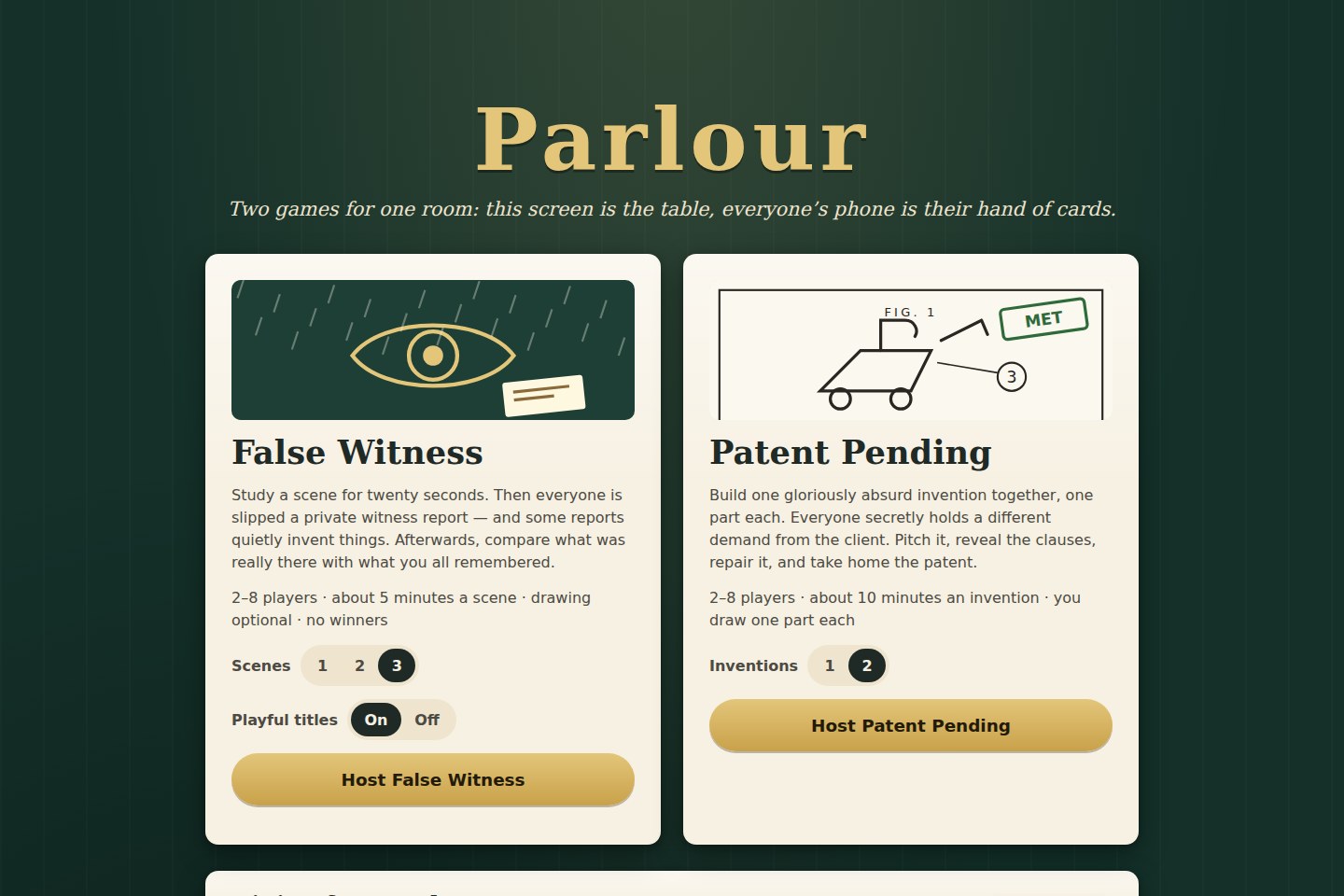
Two games, one session system
False Witness asks players to remember a shared scene while navigating misleading witness reports. Patent Pending turns private constraints into a collective invention and drawing game. Both use one host screen and separate player screens, so information boundaries are part of the rules.
The infrastructure behind the room
The server projects a different view for the host and each player. Private credentials, reconnectable event streams, bounded requests, explicit deadlines and durable checkpoints support sessions that outlive a dropped connection. A client recovery ledger distinguishes a confirmed submission from an attempt whose outcome is still unknown.
That distinction matters during play: reconnecting should recover the same player and submitted action rather than invent a second move or expose someone else’s card. Host pacing and expiry rules also keep abandoned sessions from remaining active indefinitely.
The collaboration
Codex and Claude Code developed the session foundation, game logic and host/player interfaces as a coordinated Studio project. The implementation separates transport, private views and the game’s own transitions, making it possible to inspect a rule independently of a network interruption.
Limitations
- The free hosted service can need a cold start.
- Current portfolio checks cover the public landing page; group enjoyment and physical-phone play are not established by these checks.
- The hosted demo can take a moment to wake up after inactivity.
Source code & evidence
Results reflect the linked evidence snapshots. Source artifacts retain their dates and experimental conditions.