The idea
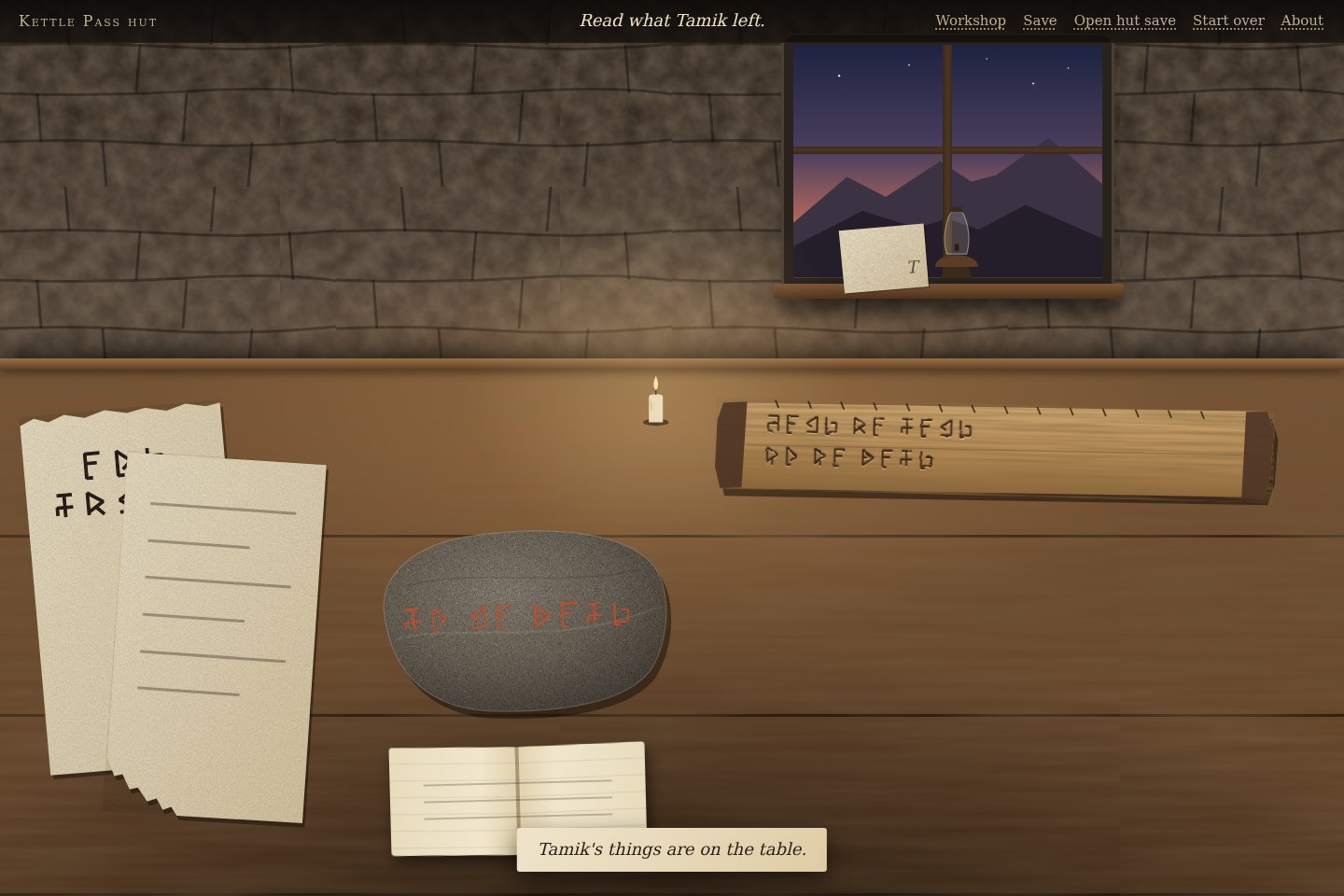
In a mountain keeper’s hut, a trail stone, tally stick and unfinished note offer clues to an unfamiliar script. Read the signs, compose a reply and reshape the letters. The companion workshop extends the premise into a tool for making a small writing system of your own.
Changes have consequences
Letter geometry, word mappings and declared sentence patterns remain distinct. Before a word or rule changes, the workshop lists affected lines. A line that no longer fits becomes unresolved until the author repairs it, rather than retaining an old translation that the new rules cannot justify.
The ledger separates drafts from accepted versions. Exports use an accepted project; quoted writing preserves its author’s words even when the current script changes. The project can produce a real TrueType font and a portable script bundle, while a standalone writing page carries accepted forms into the browser or printer.
The collaboration
Codex developed language, workspace, geometry and export foundations. Claude Code built the Kettle Pass story, hut interaction and authoring workshop. Their common boundary was meaning: editing the visual system should not quietly rewrite another author’s words.
Limitations
- The grammar is a declared toy language, not a general-purpose translator.
- Exported fonts use Private Use Area mappings and do not supply a universal keyboard or shaping system.
Source code & evidence
Results reflect the linked evidence snapshots. Source artifacts retain their dates and experimental conditions.