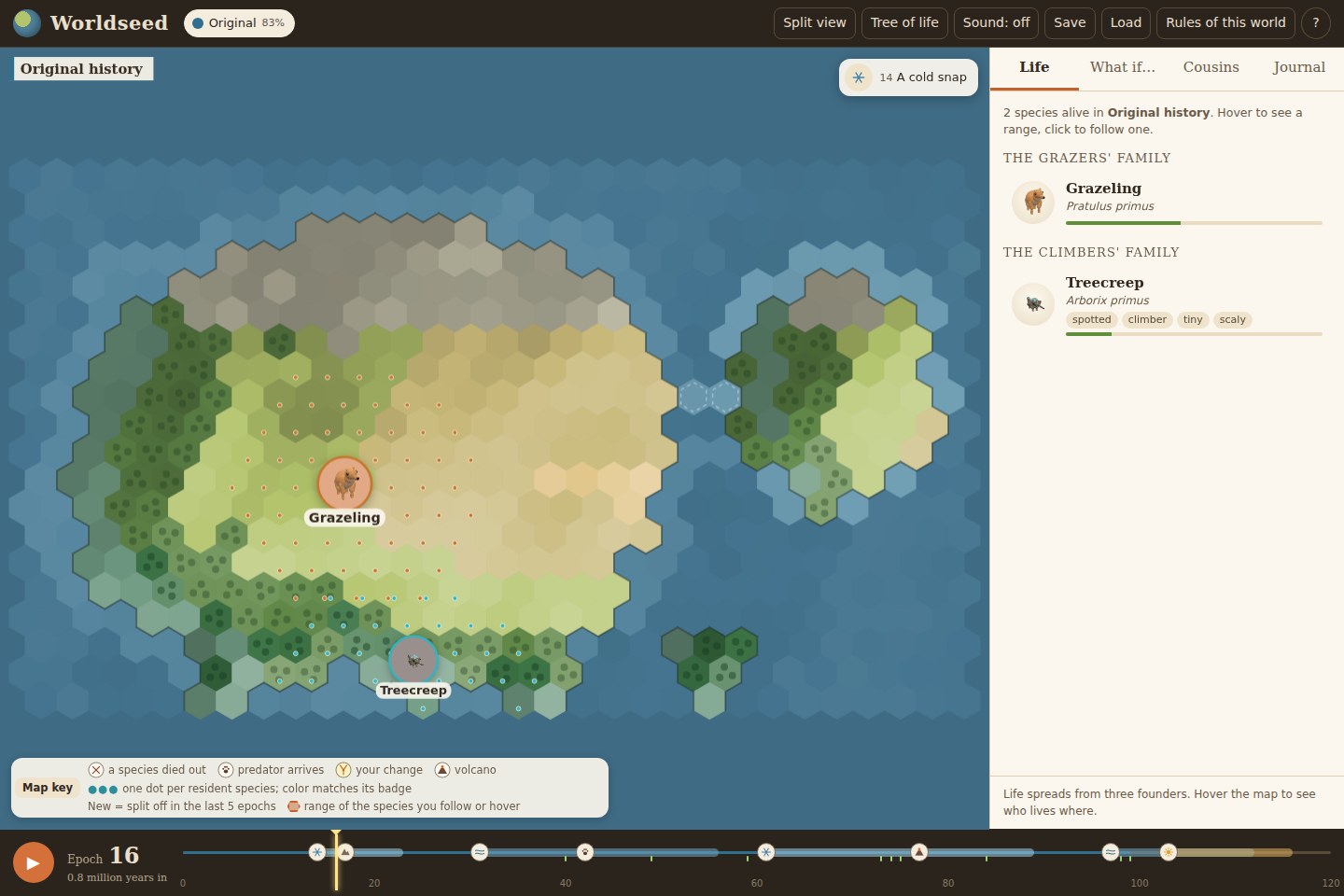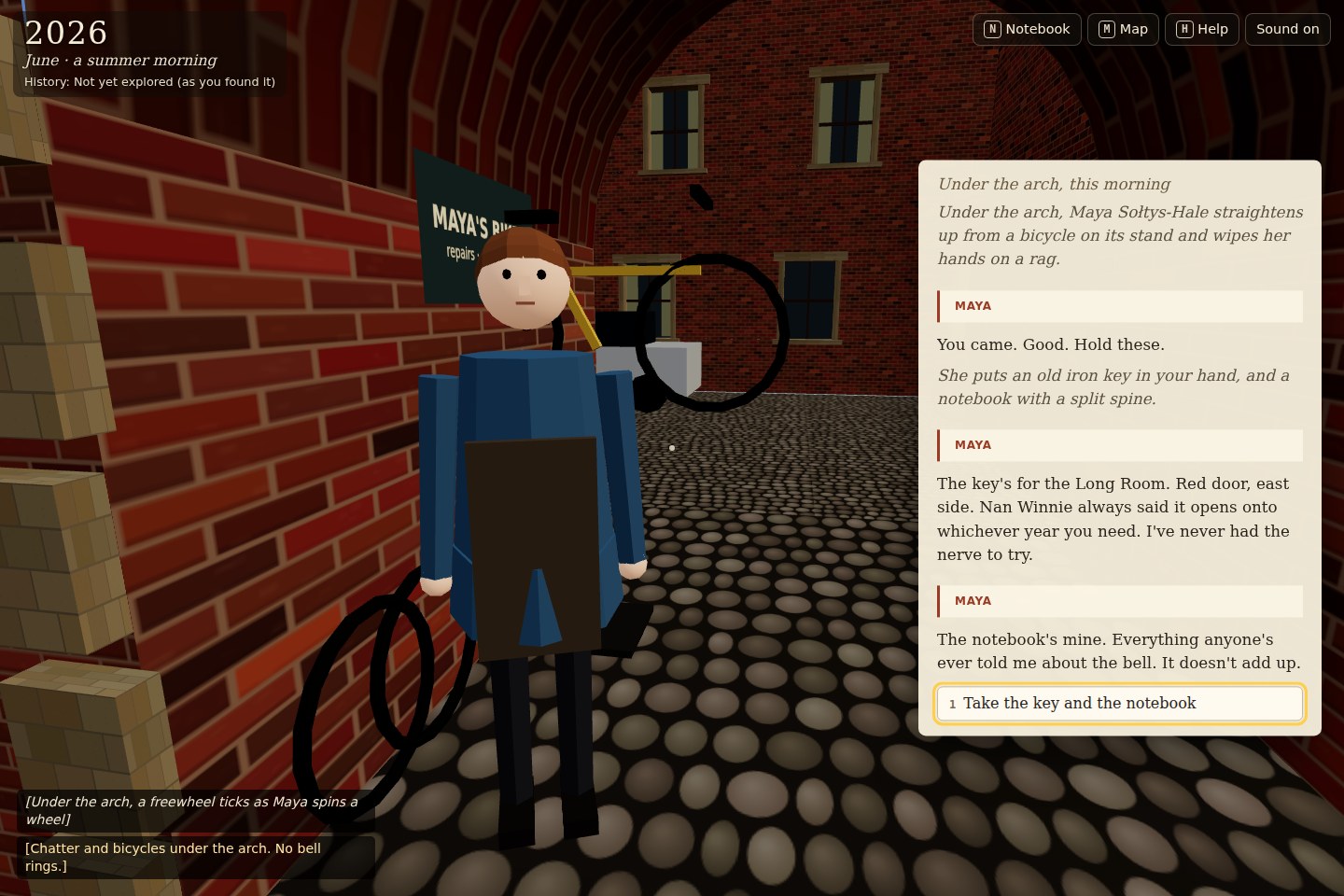
The idea
Flying close to a black hole changes more than an orbit. Across seven missions, a pilot compares ship, probe and home clocks, plans burns and sends messages to people whose lives continue at a different rate. The homecoming depends on elapsed time and the correspondence that actually arrives.
Prediction is not arrival
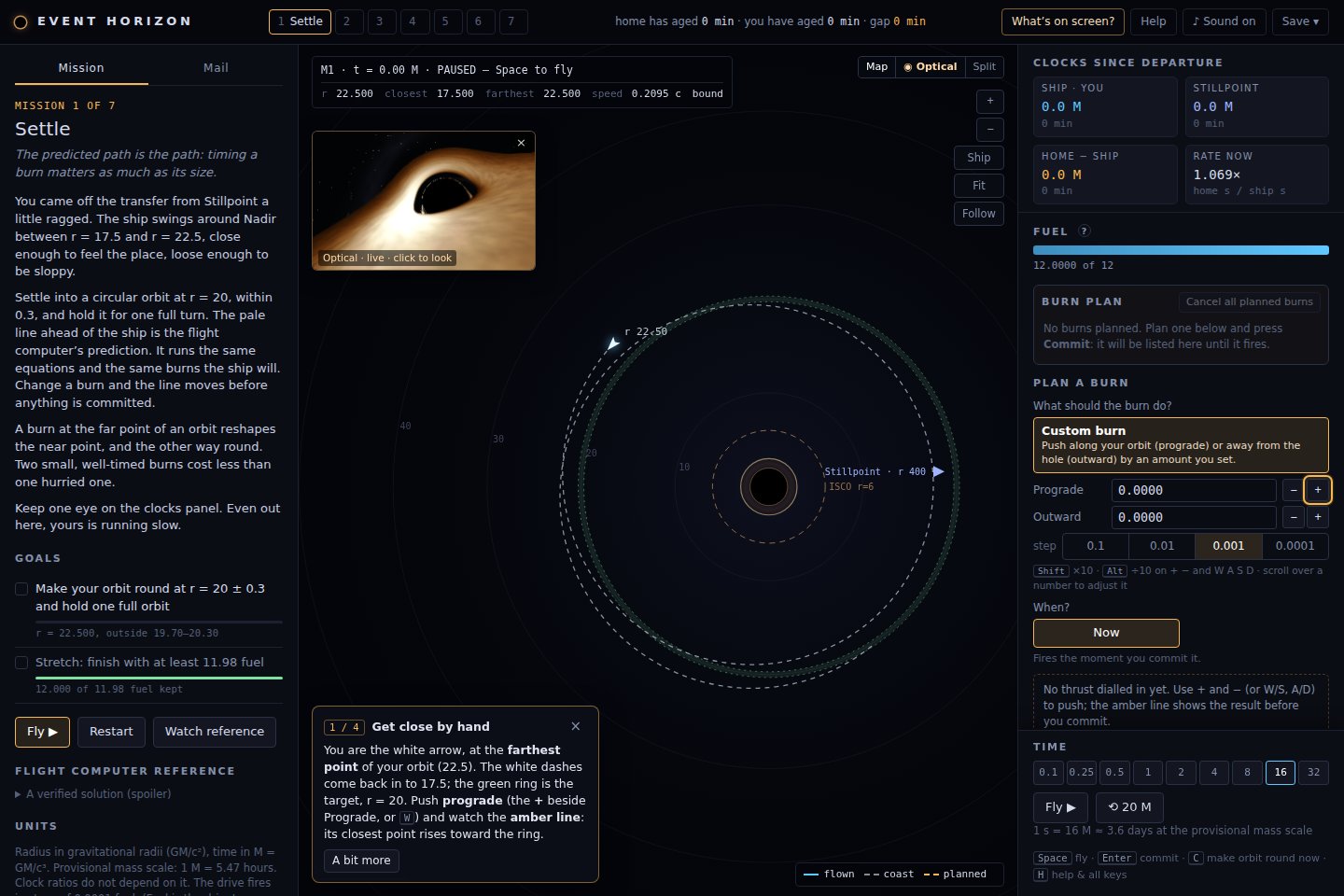
The flight planner previews maneuvers using the simulation’s own equations. A signal ledger records transmission and reception events; missions with communication consequences resolve from actual arrivals, not from a forecast painted on the interface. Pending signals remain pending.
The presentation exposes the tension through orbit maps, clocks, an optical view and a burn plan. Progressive controls teach a path from manual correction to circularization and finer planning. In one mission, a deeper orbit trades image resolution against getting a photograph home in time.
The collaboration
Codex owned physics, predictions, signals and optics; Claude Code built the expedition, interface and narrative. My playtest feedback on the first four missions prompted clearer controls, a visible burn plan and a more gradual introduction to the flight computer.
Limitations
- This is an authored simulation with declared instrument rules, not an astrophysical research package.
- Bounded event searches can remain unresolved; the interface must preserve that uncertainty.
Source code & evidence
Results reflect the linked evidence snapshots. Source artifacts retain their dates and experimental conditions.